Bubble-CDF Planner Illustration
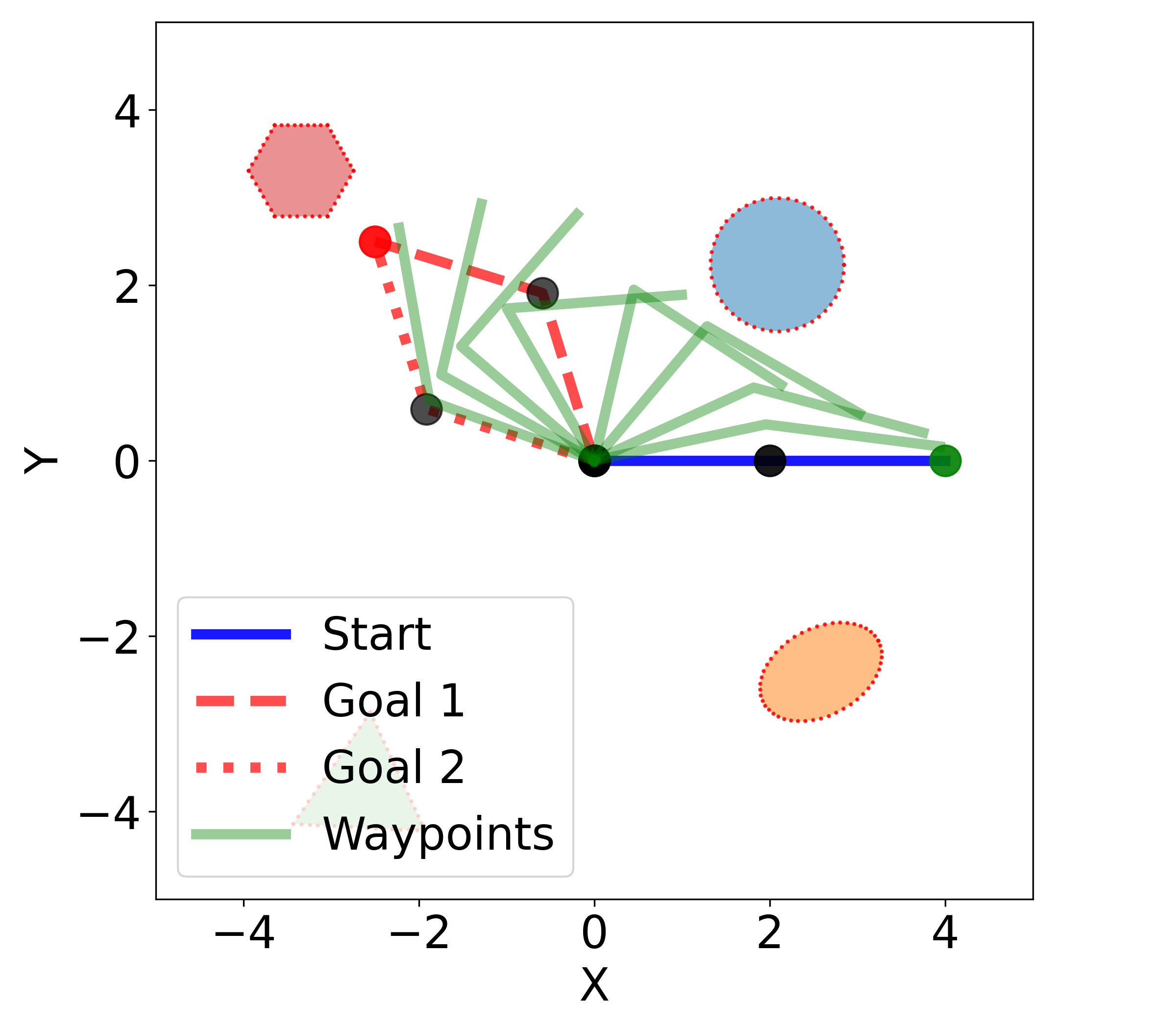
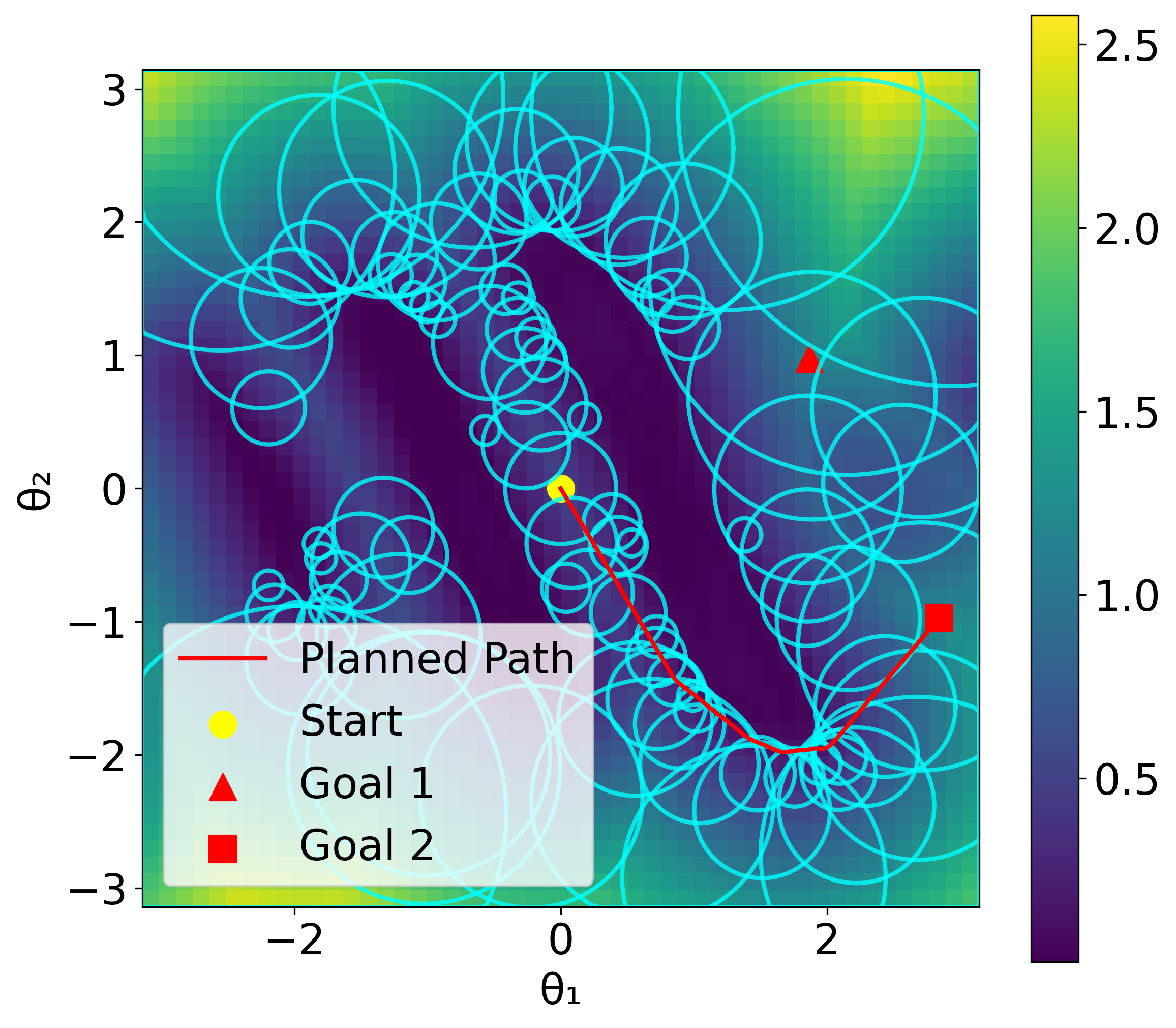
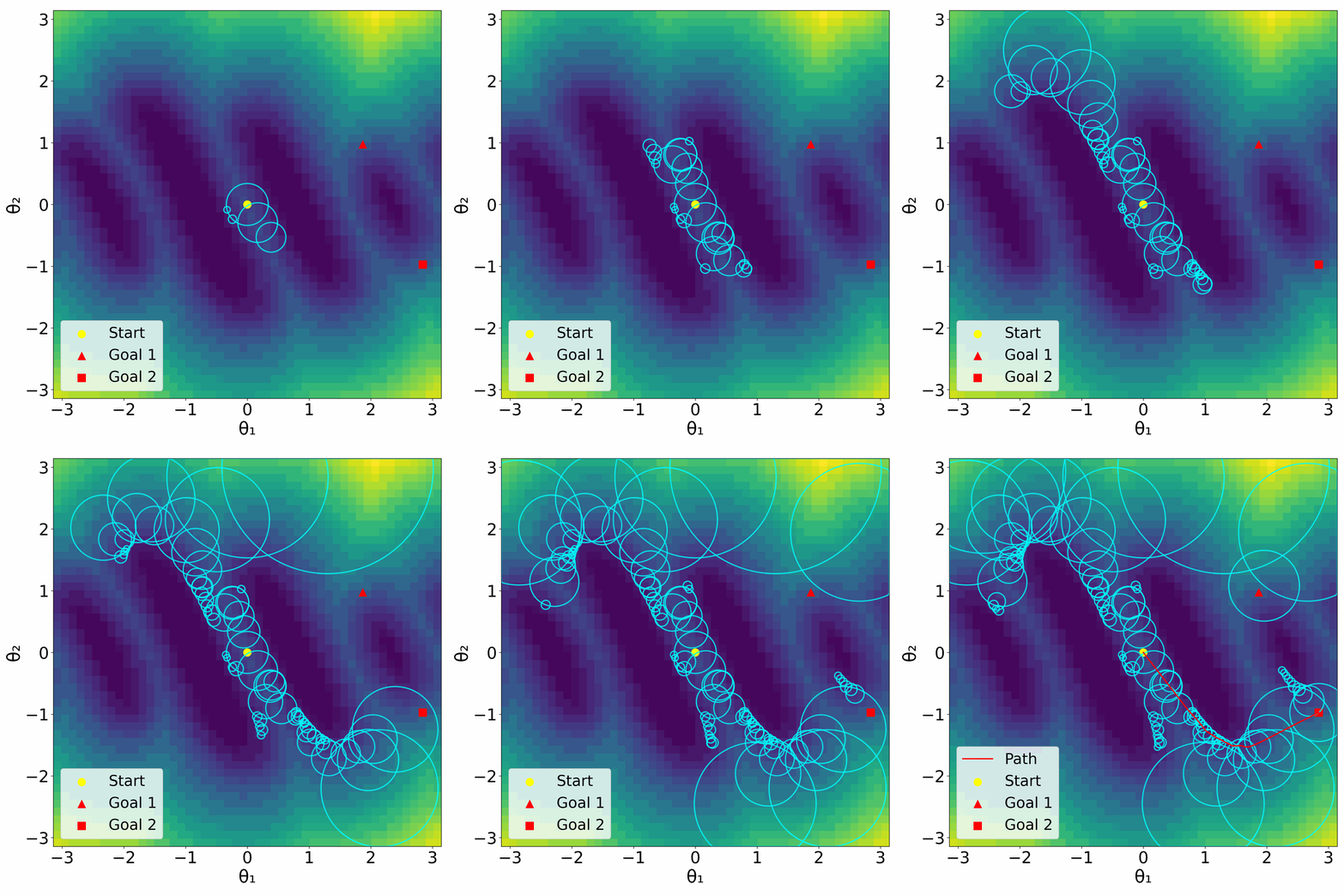
Planning and control for high-dimensional robot manipulators in cluttered, dynamic environments require both computational efficiency and robust safety guarantees. Inspired by recent advances in learning configuration-space distance functions (CDFs) as robot body representations, we propose a unified framework for motion planning and control that formulates safety constraints as CDF barriers. A CDF barrier approximates the local free configuration space, substantially reducing the number of collision-checking operations during motion planning. However, learning a CDF barrier with a neural network and relying on online sensor observations introduce uncertainties that must be considered during control synthesis. To address this, we develop a distributionally robust CDF barrier formulation for control that explicitly accounts for modeling errors and sensor noise without assuming a known underlying distribution. Simulations and hardware experiments on a 6-DoF xArm manipulator show that our neural CDF barrier formulation enables efficient planning and robust real-time safe control in cluttered and dynamic environments, relying only on onboard point-cloud observations.
@article{Long_NCSB_TASE26,
  author = {Kehan Long and Ki Myung Brian Lee and Nikola Raicevic and Niyas Attasseri and Melvin Leok and Nikolay Atanasov},
  title = {{Neural Configuration-Space Barriers for Manipulation Planning and Control}},
  journal = {IEEE Transactions on Automation Science and Engineering (TASE)},
  year = {2026},
  volume = {23},
  pages = {10173-10185},
  doi = {https://doi.org/10.1109/TASE.2026.3695092}
}